Why Clean Agricultural Machinery Matters For Export
5 October 2026 Doubleday News

When a used tractor, combine harvester or farming implement leaves the UK for a new home overseas, most people simply see a machine changing hands. For biosecurity authorities, however, it represents something quite different: a potential route for pests, diseases, invasive weeds and contaminated soil to cross international borders.
Doubleday Group has been exporting farm machinery to more than 40 countries worldwide for decades, and we know that preparing machinery for export goes far beyond its appearance. Thorough cleaning and inspection form an essential part of responsible trading, helping to protect global agriculture, preserve natural environments and meet the requirements of international markets.
Why Is Clean Export Machinery Important?
Agricultural machinery operates in close contact with soil, crops, vegetation and organic matter throughout its working life. As a result, debris can accumulate in hard to reach areas where contamination is not always immediately visible.
Common areas where material can become trapped include:
- Wheel arches and mudguards
- Axles and undercarriages
- Cultivator frames
- Combine headers
- Grain tanks
- Tracks and rollers
- Engine bays and protective guards
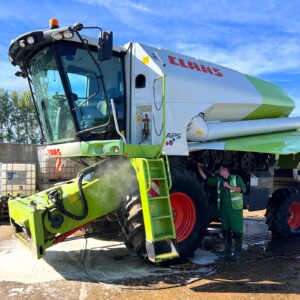
These small hidden traces of soil or plant material can harbour weed seeds, invasive species, insects, fungi, bacteria and plant diseases. The UK Government’s plant biosecurity strategy identifies international trade and transport as key pathways through which pests and diseases can spread between countries. For importing nations, contaminated machinery presents a genuine risk to their agricultural production, horticulture and forestry.
Why Are DEFRA and APHA Inspections Necessary?
The UK Department for Environment, Food & Rural Affairs (DEFRA) and the Animal and Plant Health Agency (APHA) oversee plant health measures that support both biosecurity and international trade.
For machinery being shipped to certain destinations, inspections may be required to confirm that equipment:
- Has been thoroughly cleaned
- Is visibly free from soil
- Contains no plant debris or organic matter
- Complies with the importing country’s plant health requirements
Current UK Plant Health guidance states that used agricultural machinery being exported to EU member states must be washed before shipment and be visibly free from all soil and debris. Following inspection, a phytosanitary certificate can then be issued approving the machine for export. The same principles apply to machinery entering Great Britain from overseas, where documentation may be required to demonstrate that equipment has been properly cleaned prior to import.
These controls are not intended to create obstacles for exporters. Their purpose is to minimise the risk of harmful organisms being introduced into new environments.
The Hidden Threat Beneath the Mud
Of all potential contaminants, soil remains one of the greatest concerns for inspectors. A seemingly insignificant amount of dirt can contain a range of potentially harmful contaminants, including:
- Fungal spores – These along with bacteria and other plant pathogens can survive within soil and organic matter. If introduced into an environment where they do not currently exist, these organisms can establish and spread, potentially affecting crops, food production and surrounding ecosystems.
- Insect eggs and larvae – New Zealand reports that insects, snails, spiders and egg masses are among the most common contaminants found on imported machinery. When introduced into a new environment, these organisms may be able to reproduce rapidly because native predators may not exist to control populations.
- Invasive weed seeds – A single agricultural machine can carry hundreds or even thousands of weed seeds hidden in soil and plant materials. When those seeds arrive in a new country, they may establish. Once established, invasive weeds can compete with crops for nutrients and water reducing yields. This can damage native plant populations and result in costly long-term weed control programmes.
Once an invasive species, pest or disease becomes established, eradication is often difficult, expensive and sometimes even impossible. Because of these risks, the movement of soil and other organic materials is closely regulated. Biological threats can often be invisible to the naked eye, making thorough cleaning an important safeguard. In fact, even a small amount of soil hidden behind a guard or axle can result in a failed inspection.
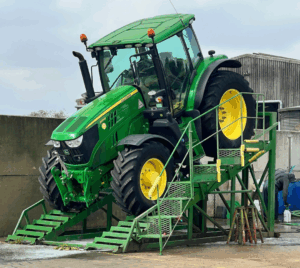
This is why we take such care when preparing machinery for export. Our skilled valeting team takes immense pride in preparing every machine to the highest standard. To support them, we continually invest in equipment that improves both safety and efficiency. The recent addition of a custom-built elevated wash ramp allows our team to safely access every area of a machine during the cleaning process, helping to ensure it is thoroughly cleaned the first time. By ensuring every machine is cleaned and inspected to a high standard before it leaves our yard, we help customers avoid the inconvenience of unnecessary delays and additional costs.
Learning from Past Biosecurity Threats
Modern biosecurity regulations exist for good reason. History has repeatedly demonstrated the damage that invasive species, pests and diseases can cause when they enter environments where they do not naturally occur.
While there are very few documented cases linking UK-exported agricultural machinery directly to major outbreaks overseas, the underlying risks remain real. Soil can carry disease-causing organisms, insect larvae and weed seeds capable of surviving international transport.
This is why countries such as Australia and New Zealand invest heavily in border inspections and routinely intercept machinery they suspect to be carrying soil, plant matter, insects and other contaminants. The aim is simple, prevent future outbreaks before they occur.
What This Means for Exporters
For anyone involved in exporting used agricultural machinery, cleaning should be viewed as a vital part of the preparation process rather than a final cosmetic touch.
Proper cleaning and inspection can help to:
- Ensure compliance with import regulations
- Prevent delays at ports and border inspections
- Avoid costly re-cleaning or re-inspection charges
- Reduce the risk of shipments being rejected
- Support a smoother experience for customers
As international trade continues to grow, biosecurity will remain a key consideration for machinery movements around the world. Ultimately, DEFRA, APHA and other plant health authorities are not concerned with how a machine looks. Their focus is protecting farms, forests and ecosystems from threats that may be hidden within soil, debris or organic matter.
By maintaining the highest standards of machinery preparation, exporters like ourselves play an important role in supporting safe global trade while helping to protect the future of agriculture.
Looking to Import Agricultural Machinery from the UK?
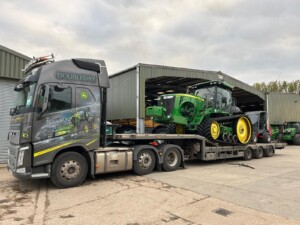
Doubleday Group has years of experience exporting used agricultural machinery worldwide. From preparing equipment for inspection and certification to arranging international shipping, our team can help make the process straightforward and hassle-free.
Browse our current stock of used tractors, combines and agricultural machinery here, or contact our team to discuss your export requirements today.
 English
  Ukrainian
  Spanish
  German
  French